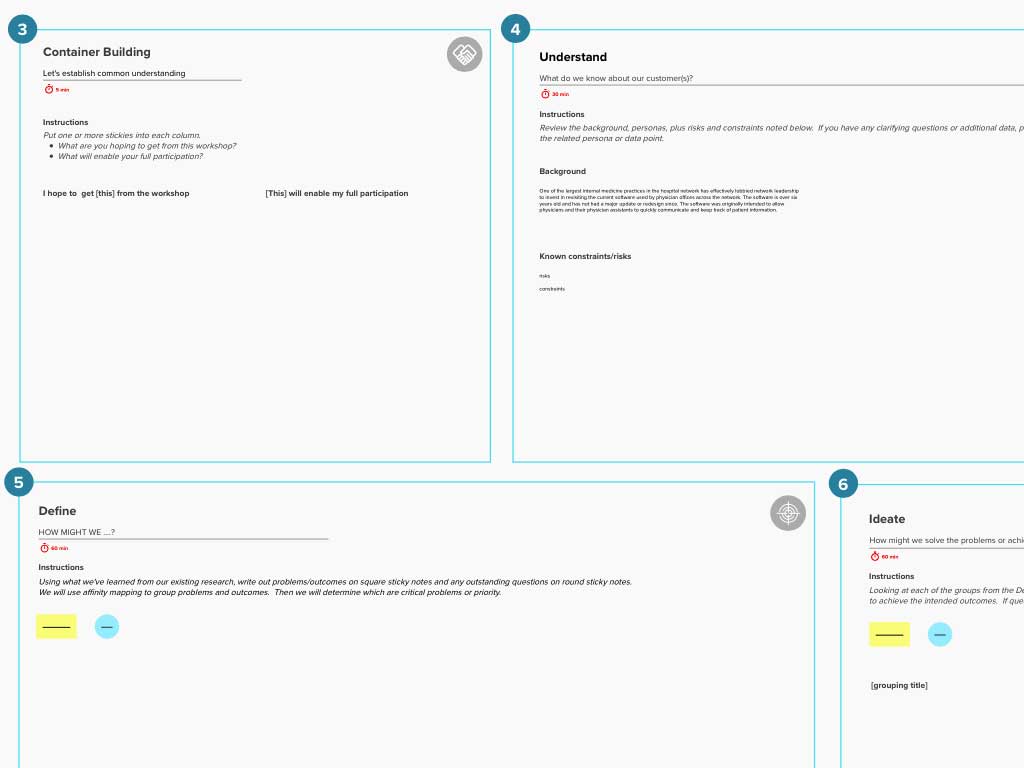
Old service desk application lacked modern features, proper taxonomy and user-friendly design.
The service desk application used to gather and track service requests from employees within the organization was outdated and difficult to use. The replatforming effort would need to address underlying process and taxonomy issues in addition to creating a more modern, user-friendly design.
The frame.
Where we began and who was affected.
The system used to log tickets for technology issues was outdated, difficult for users to understand and for the Service Desk to manage on a daily basis. Lack of proper categorization made it nearly impossible to get accurate reporting data.
- Users did not understand how to enter a ticket into the system and many preferred to go directly to the service desk in person.
- Categorization for a particular ticket was confusing creating ambiguity in where tickets were routed or located.
- Approval chain was not always clear for certain types of requests.
- Seemed like tickets would go into a “black hole” or take a long time to resolve.
We needed a system that users could easily understand and would trust. It also needed to provide clear visibility into the ticket resolution process with standard procedures and categorization.
"We have multiple ways to categorize a password reset. The way it is logged is dependent on who trained the service desk staff." New Service Desk Manager
Who I talked to.
I worked with a diverse group of stakeholders including IT and Service Desk leadership, office personnel, consultants hired to gather insights and vendor hired for development.
Below are the insights that emerged from our discussions with those requesting help and those that supported them.

Service Desk Analyst (Tier 1)
Is interrupted frequently by in person requestsWas often approached at their desk for help because users did not understand how to enter a ticket into the system; categorization for a particular ticket was confusing (a password reset could be categorized up to 7 different ways)

Systems Engineer (Tier 2)
Fulfilling tickets disrupts main jobReceived escalated tickets with few details and requiring follow up with the customer; approval chain wasn’t always clear for all requests; sometimes resolving tickets consumed more time than doing their “day job”

Requestors
Does not understand or trust existing systemWould rather just call Service Desk or email them because entering a ticket was hard or took too much time; seemed like their ticket would go into a “black hole” and take a long time to resolve — or would be marked as resolved when it actually wasn’t.
What we found.
These are 3 key insights we gathered through research, speaking with stakeholders and the vendor team helping with the replatforming effort.
Categorization caused confusion for both requestors and analysts.
Users were unsure how to log tickets, causing delays in resolution and difficulty in service level agreement (SLA) reporting.
Organizational knowledge was held by individuals and not documented.
Depending on how the individual was trained, the resolution process and terminology used could vary significantly, leading to inconsistencies in how information was shared and applied.
New system would require establishing a design system.
Unlike the previous system, the new one would allow for the use of a components style guide.
Where we landed.
Recommendations provided to the vendor helping our organization with development.
Organization of services offered
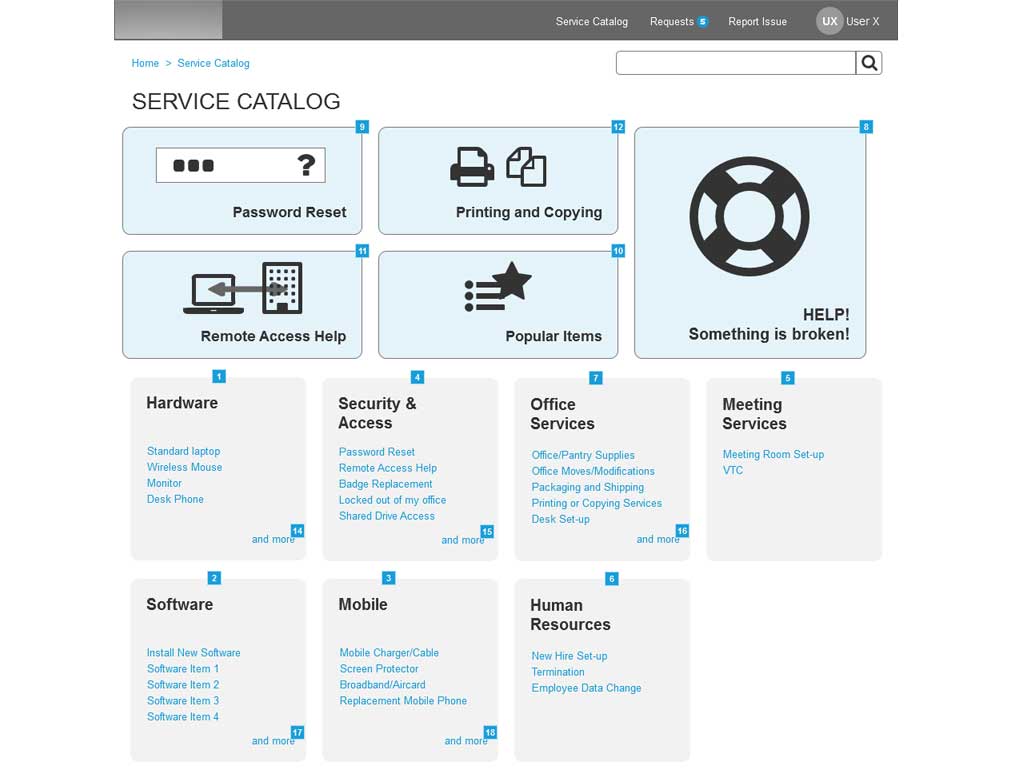
Created taxonomy of services to improve discoverability and reduce confusion.
Vetting design before and during build
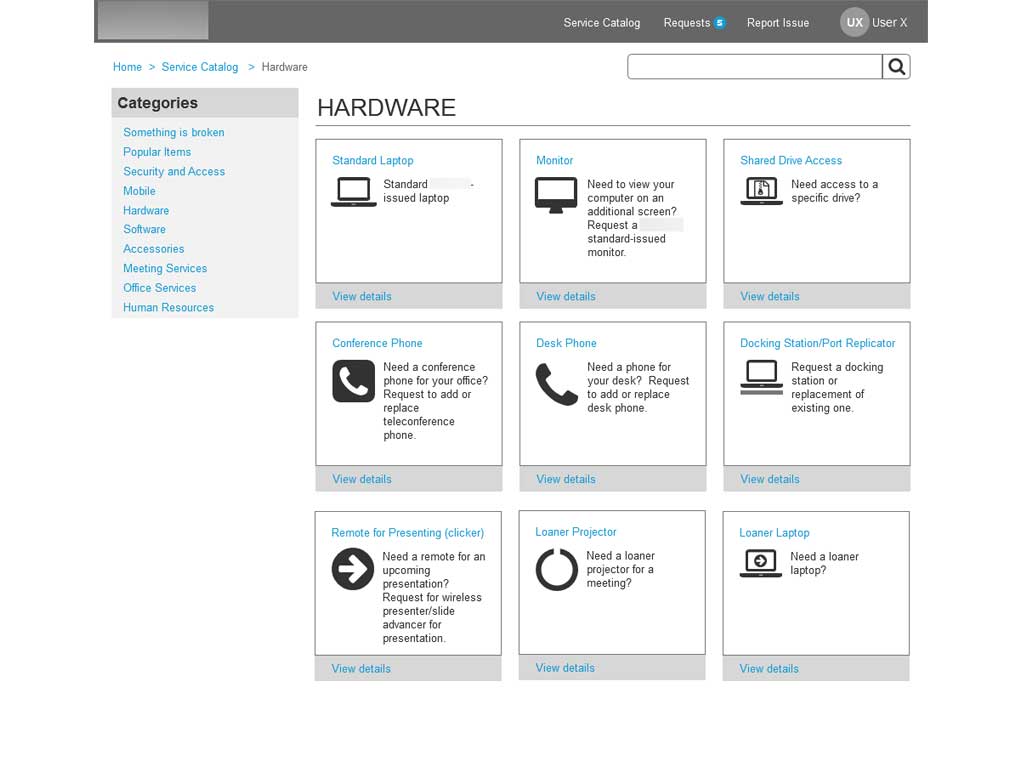
Leverage lo-fi wireframes to validate concepts with a few users and stakeholders before and during the build process.
Define processes for most used requests and incidents
Created detailed workflows for the most common types of requests and incidents to ensure consistency in handling.
Design library for developer reference
Created a design system with reusable components and guidelines to ensure consistency in development.
What I made.
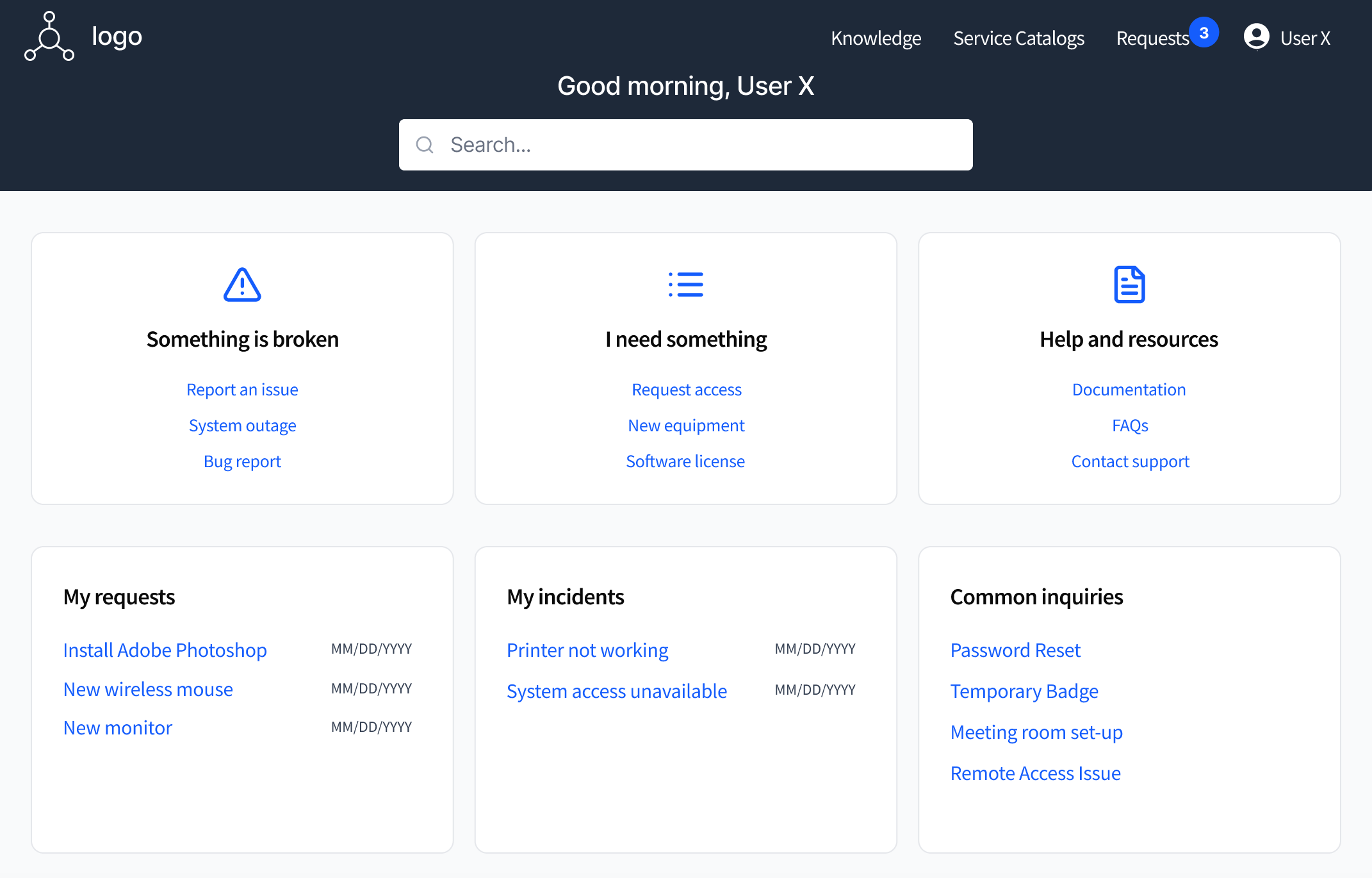
These are sanitized versions of the originals done in Axure RP, which are under NDA.
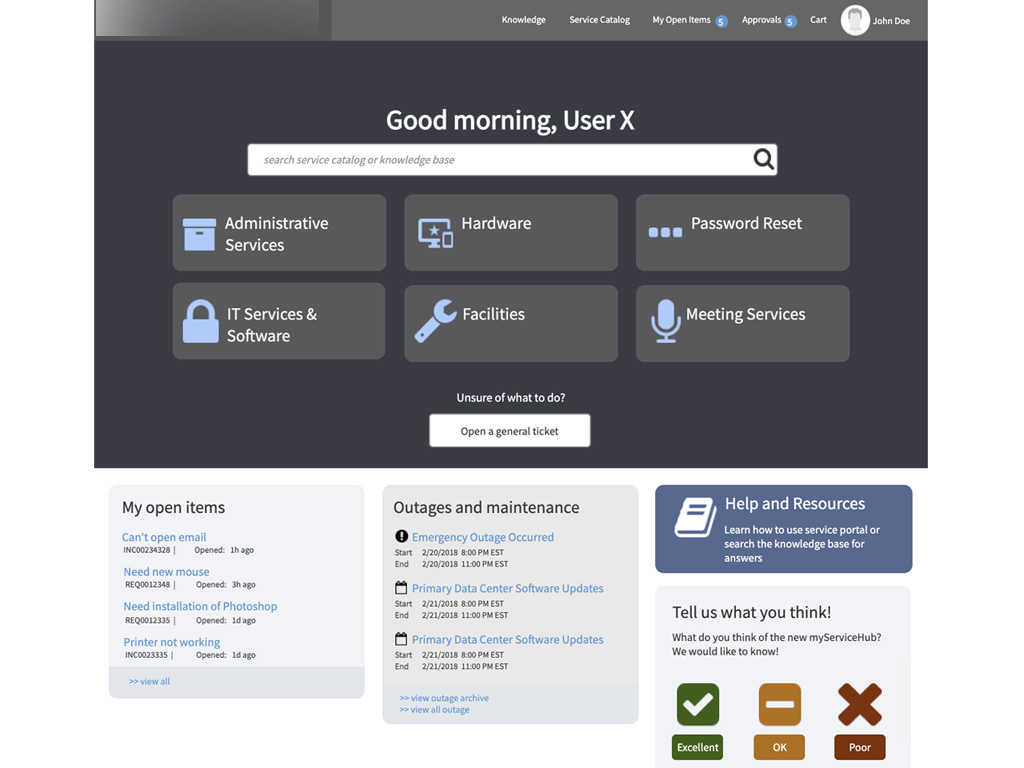
What changed.
No specific numbers I'm able to share, but the qualitative signals from leadership and the field were consistent.
Recommendations for new taxonomy, process refinement and documentation, and implementation of design library were accepted and threaded into the COTS implementation.
Training was required for the new system but after a few months of use, we saw less in-person visits to service desk and improved reporting capabilities.
Leadership recognized the value of the new tool and invested in its continued development including expanding the service catalog.
Because of the recognized value of the new tool, leadership allocated additional internal resources to support its continued development and maintenance.
My role.
Initially UX designer on this effort, my role evolved to oversight of consulting team hired to do research and working with vendor developers to implement the design.
What I did
- Started design library for the new service catalog (handed off to fellow designer once promoted to UX Manager)
- Brainstormed data collection with consulting team
- Examined data collected for persona creation
- Collected stakeholder requirements and feedback
- Created taxonomy for service catalog working alongside the new Service Desk Manager
- Defined site map and navigation structure to align with taxonomy
- Collaborated with vendor development team to understand technical constraints
- Used wireframes to test final categorization and presentation of service offerings
What the team did
- Created multiple personas based on research findings
- Filled in details for established taxonomy
- Developed the technical architecture for the new service catalog
- Implemented the design for the new service catalog